Dr. Sam Harouni, DDS, oral & maxillofacial surgeon, restores both function and aesthetics with implants planned around your anatomy — not a template.
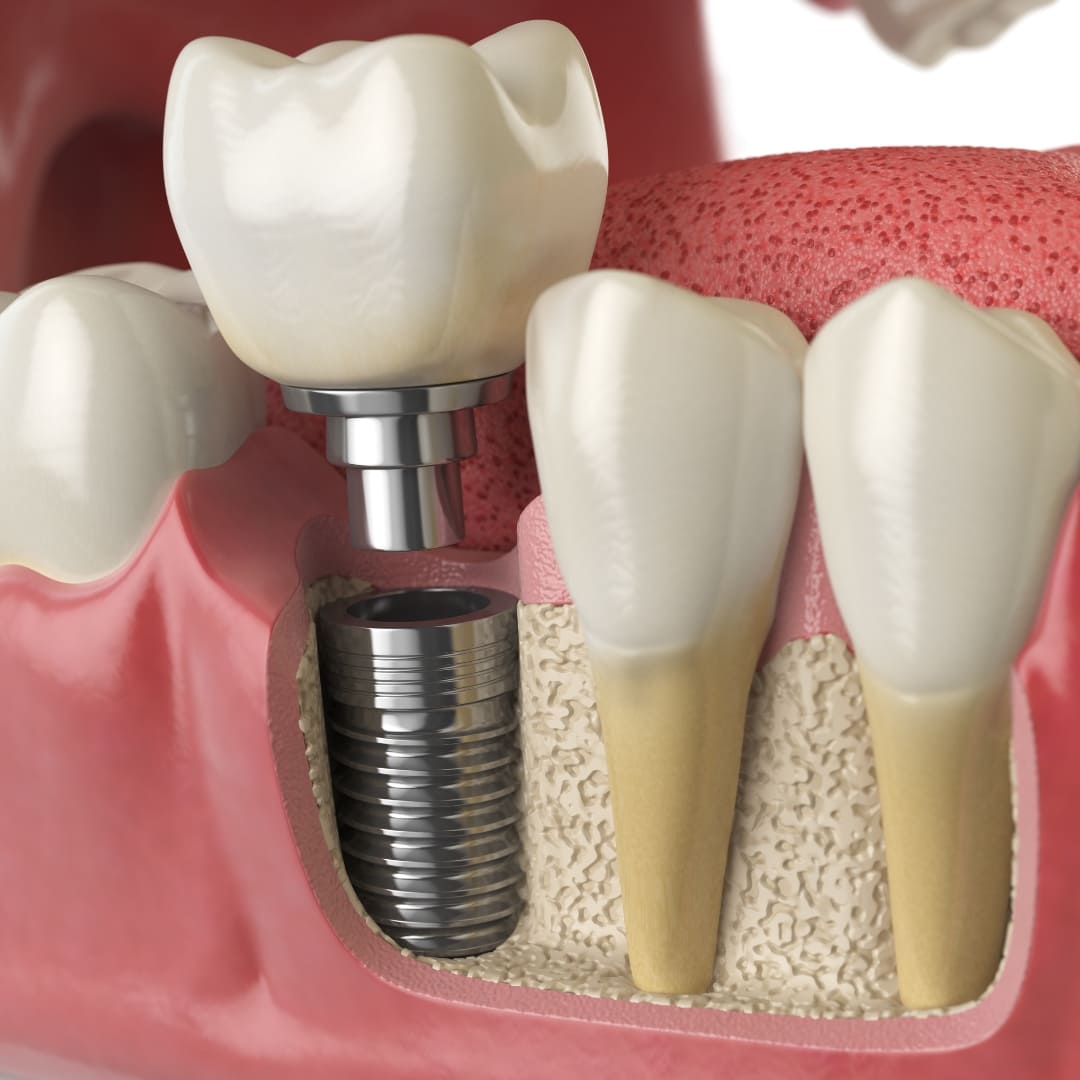
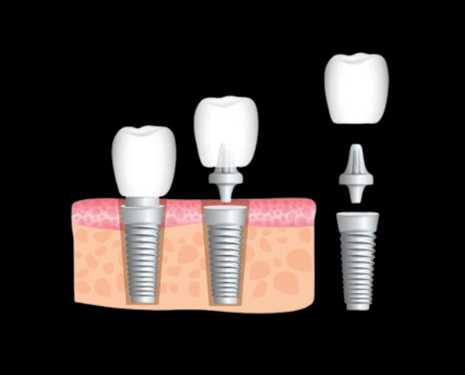
A dental implant is a small, screw-shaped post made of biocompatible titanium, placed into the jawbone to take the role of a natural tooth root. Once it fuses with the bone, it carries a crown, a bridge, or a full set of teeth.
Unlike removable dentures or a bridge supported by neighbouring teeth, an implant stands on its own. Nothing healthy has to be reduced, nothing shifts while you speak, and the restoration on top is made to match the teeth around it in shade, shape and proportion.
It is the current gold standard for tooth replacement — and in experienced hands, the most predictable one.
A missing tooth is rarely just cosmetic. The bone that once held the root begins to shrink, and the rest of the mouth adjusts around the space.
Food gets avoided rather than enjoyed, and load shifts onto teeth never meant to carry it.
Certain sounds soften or whistle, which most people notice long before anyone tells them.
Neighbouring teeth tip into the space and opposing teeth over-erupt, altering your bite.
Jawbone volume is lost month by month, which can limit your options later and change facial contour.
Tilted teeth and awkward contacts trap plaque, raising the risk of periodontal disease.
What a single implant could solve today may need grafting or a full-arch plan in a few years.
One tooth, several teeth, or an entire arch — including cases other offices have already declined.
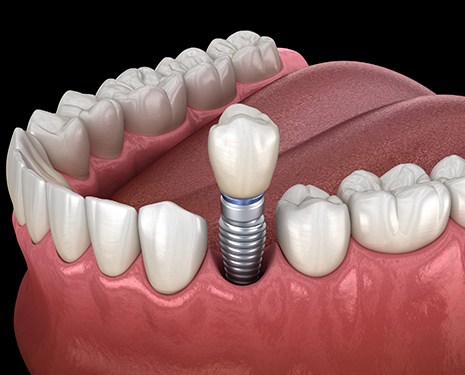
One post, one custom crown. The most conservative way to replace a tooth, because nothing beside it is touched.
When bone quality allows, extraction, placement and a temporary tooth can happen in a single visit.
Two or more implants carry a fixed bridge, replacing several teeth in a row without a removable appliance.
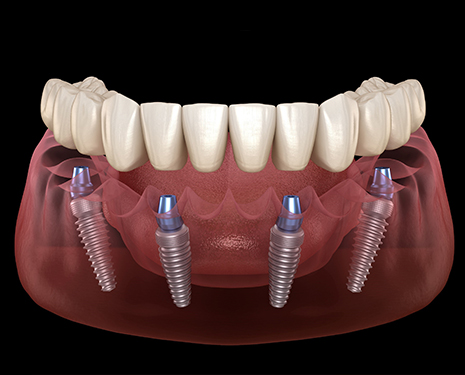
A full fixed arch supported by four strategically angled implants, often with a provisional set the same day.
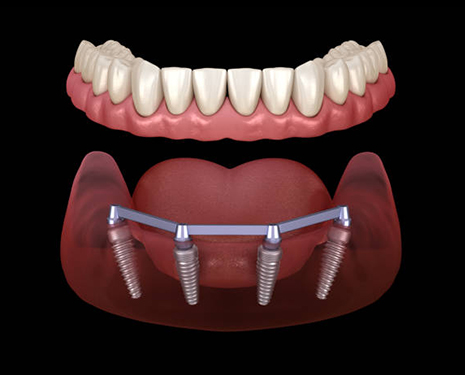
A denture that clips securely onto implants. It stays put while you eat and speak, and lifts out for cleaning.
A ceramic alternative to titanium for patients who prefer a metal-free restoration or have thin, translucent gums.
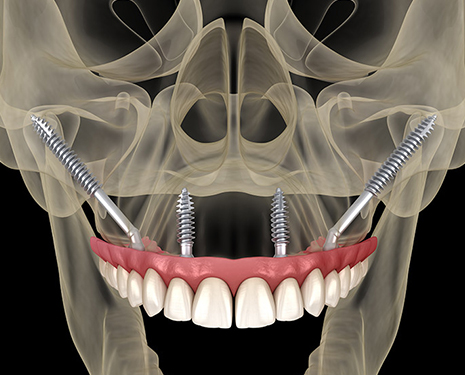
When the upper jaw no longer has bone to hold conventional implants, zygomatic implants anchor into the cheekbone instead — often avoiding years of grafting. Very few surgeons in Los Angeles place them.
A specialist practice built around implant surgery — not a general office that also places implants.
Four stages, each with a clear purpose. You will know the plan, the timeline and the investment before treatment begins.
We review your goals and health history, examine the site, and take 3D imaging. You leave with a written treatment plan and cost.
The implant is placed under your chosen level of anaesthesia, following the guided plan. Most patients return to normal routines the next day.
Over the following months, bone grows onto the implant surface and locks it in place. A temporary tooth keeps you presentable throughout.
Once integration is confirmed, a custom abutment and your final restoration are fitted, shaped and shade-matched to the teeth beside it.
Dr. Harouni is an oral, maxillofacial and implant surgeon practising in Beverly Hills. His work is concentrated on implant reconstruction — from single teeth to full-arch and zygomatic cases — alongside wisdom teeth, extractions and bone grafting.
Patients are seen by the surgeon who will perform their procedure, from the first consultation through to the final restoration and follow-up. Complex cases are planned with the restoring dentist so the surgical and cosmetic results agree.
The office was wonderful and looked after me through the consultation and the surgery itself. The material they recommended was so good that I didn't bleed at all after my wisdom teeth surgery. I'd recommend going here.
— Y. L., Google reviewI came in expecting to be told I needed a year of grafting somewhere else first. Dr. Harouni showed me the scan, explained exactly what he could anchor into, and did it in one surgery.
— Verified patient, implant reconstructionEvery question answered before I asked it, and the final crown matches the tooth next to it so well that my own dentist had to look twice. Worth every bit of the investment.
— Verified patient, single implantIndividual results vary. Reviews reflect the experience of specific patients.
If yours isn't here, ask it at your consultation — or call the office and speak to someone who can answer it.
Most healthy adults with a missing, broken or failing tooth are. What matters is bone volume at the site, gum health, and how well conditions such as diabetes are controlled. Smoking and untreated periodontal disease affect healing and are addressed first. A 3D scan at your consultation gives a definitive answer rather than an estimate.
Cost depends on how many implants are needed, whether grafting or sinus work is required, the restoration material, and the sedation you choose. A single implant with a crown sits in a different range from a full-arch reconstruction. You receive an itemised written quote at the end of your consultation, with no treatment started before you have it.
Yes. Treatment can be staged over time, and third-party financing options are available so a larger reconstruction can be paid monthly rather than upfront. Our team will walk through what you qualify for before you commit.
Many plans contribute toward extractions, grafting or the restoration even when the implant itself is only partly covered. We verify your benefits before treatment and submit on your behalf, then show you exactly what remains out of pocket.
The surgery itself is not — the site is fully anaesthetised, and local, oral or IV sedation is available. Afterwards, most patients describe mild soreness for a few days, managed with over-the-counter medication. Placing a single implant is generally an easier recovery than having a tooth extracted.
Placement usually takes about an hour per implant. Integration with the bone then takes roughly three to six months before the final restoration is fitted. In selected cases a temporary tooth is placed the same day, so you are never without something to smile with.
That is one of the most common reasons patients come here. Options include bone grafting, sinus augmentation, or — in the upper jaw with severe loss — zygomatic implants anchored in the cheekbone, which can avoid a long grafting sequence entirely. Bring your existing scans and we will tell you what is realistic.
A denture rests on the gum and the bone beneath it continues to shrink. A traditional bridge requires cutting down two healthy teeth. An implant replaces the root itself, preserves bone at the site, and leaves neighbouring teeth untouched — which is why it costs more initially and usually less over a lifetime.
The implant post is intended to be permanent, and integrated implants routinely serve for decades. The crown or bridge on top is a wearing part and may need replacing after many years, much like any restoration. Daily hygiene and regular reviews are what protect the investment.
Yes. Records and scans can be reviewed in advance, surgical and restorative visits can be grouped to reduce trips, and we coordinate follow-up with a dentist near you. Tell us your travel constraints and the plan is built around them.
No. You can book directly. If you already have a dentist, we keep them informed and plan the surgery around the restoration they intend to place.
Tell us what's bothering you and when you can come in. Our team will confirm a consultation time, usually the same day you call.
| Monday | 8:00 AM – 5:00 PM |
| Tuesday | 9:00 AM – 5:00 PM |
| Wednesday | 9:00 AM – 5:00 PM |
| Thursday | 8:00 AM – 5:00 PM |
| Friday | 8:00 AM – 5:00 PM |
| Saturday | Closed |
| Sunday | Closed |
Surgical consultations are scheduled in advance. For post-operative concerns outside these hours, call the main line for instructions.
Exceptional surgical care, tailored to you. Book a consultation and see what is possible for your smile — a brighter one is a call away.