


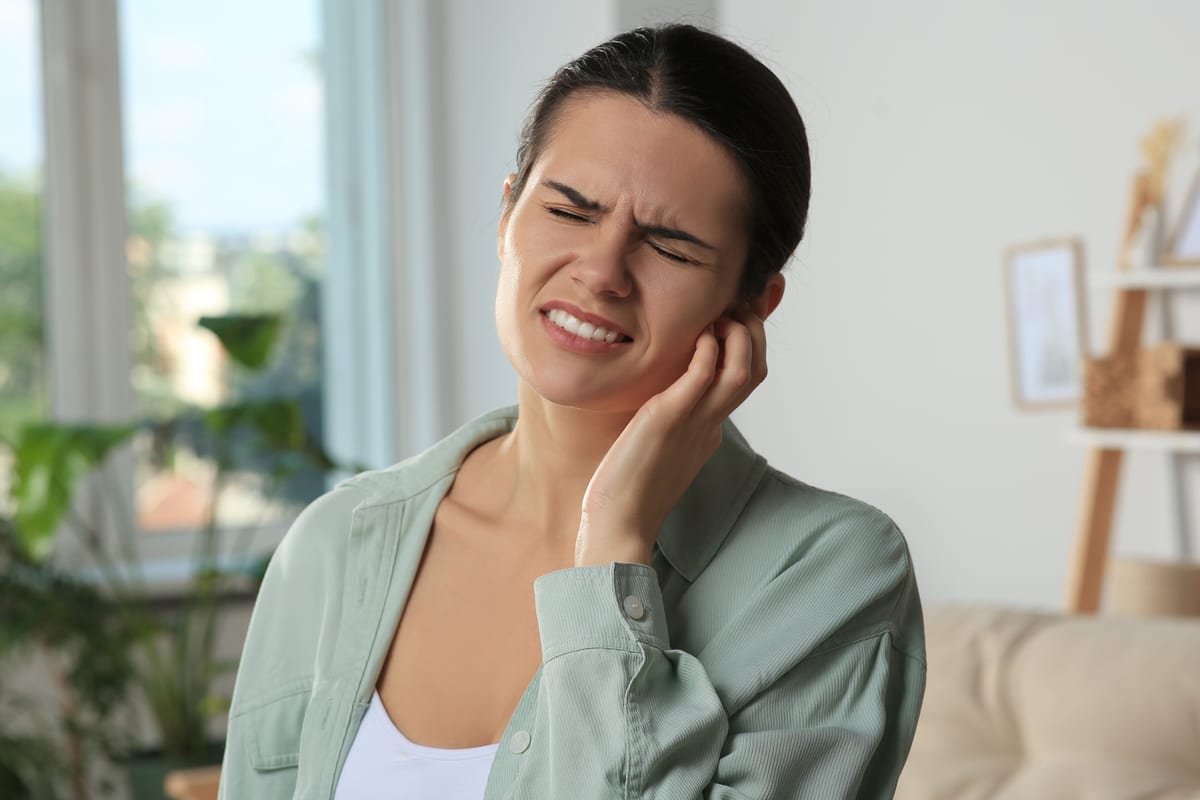
You’ve had ear pain for weeks. You’ve seen your doctor. Your ears look completely fine. Sound familiar? Many Beverly Hills patients are surprised to learn that ear pain might actually be your jaw causing the problem. The temporomandibular joint — your TMJ — sits right in front of your ears. When it’s inflamed or misaligned, it sends pain signals that feel exactly like an ear infection. Dr. Sam Harouni at Beverly Hills Oral & Facial Surgeon sees this pattern regularly.
Why That Ear Pain Might Actually Be Your Jaw in Beverly Hills
Your jaw joint is a complex hinge that connects your skull to your lower jaw. It controls every bite, yawn, and word you speak. When something goes wrong with this joint, the pain doesn’t always stay local. It radiates outward — often directly into the ear canal area.
This is why so many patients chase the wrong diagnosis for months. They treat their ears, their sinuses, or even their teeth. But the real source of the problem is the jaw joint itself. Understanding this connection is the first step toward real relief.
The trigeminal nerve runs through this area and shares pathways with the ear. When your TMJ is stressed, that nerve broadcasts pain broadly. Beverly Hills residents dealing with unexplained ear discomfort should absolutely consider a jaw evaluation.
The Full Spectrum of TMJ Symptoms You Might Be Ignoring
TMJ disorder is notorious for wearing many disguises. Most people only think of jaw pain. But the condition produces a wide range of symptoms that seem completely unrelated to your mouth.
Here are the most common TMJ symptoms patients experience:
- Jaw pain or soreness — especially in the morning after sleeping
- Clicking or popping sounds when you open or close your mouth
- Ear pain or a feeling of fullness in the ear without infection
- Chronic headaches that feel like tension or migraine pain
- Neck stiffness and shoulder tension that won’t go away
- Difficulty opening your mouth fully or jaw locking in place
- Facial fatigue after eating or talking for long periods
You don’t need every symptom to have TMJ disorder. Even two or three of these signs together warrant a professional evaluation. Many patients live with these symptoms for years before connecting them to their jaw.
How Jaw Clicking and Headaches Connect to TMJ Disorder
That clicking sound when you chew? It’s not just annoying. It’s a signal that your jaw disc — a small cushion inside the joint — is moving out of position. Over time, this can worsen and lead to more significant pain and dysfunction.
Headaches are another overlooked symptom. When your jaw muscles work overtime to compensate for a misaligned joint, they fatigue quickly. That muscle tension travels upward into your temples and across your forehead. Many Beverly Hills patients who manage chronic headaches are actually dealing with untreated TMJ disorder.
Neck stiffness follows a similar pattern. The muscles around your jaw connect to your neck and upper back. A stressed jaw joint creates a chain reaction of tension throughout your upper body. Treating only the neck misses the root cause entirely.
What Causes TMJ Disorder in the First Place?
Several factors can trigger or worsen TMJ disorder. Understanding the cause helps guide the right treatment approach.
Common contributing factors include:
- Teeth grinding or clenching — often during sleep, sometimes connected to stress
- Jaw misalignment — when the upper and lower teeth don’t meet properly
- Arthritis — inflammation that affects the joint directly
- Injury or trauma — a blow to the jaw or whiplash from an accident
- Stress — which causes people to clench without realizing it
- Sleep apnea — jaw positioning during sleep can strain the TMJ over time
It’s worth noting that sleep apnea and TMJ disorder sometimes overlap. Patients who clench at night or sleep with their jaw in poor positions may develop symptoms of both conditions. Dr. Harouni evaluates each patient as a whole to identify all contributing factors.
How TMJ Treatment Works at Beverly Hills Oral & Facial Surgeon
Dr. Sam Harouni takes a thorough, individualized approach to TMJ treatment. No two cases are exactly alike. Treatment starts with a detailed evaluation of your jaw joint, bite, and muscle function.
Depending on the findings, treatment options may include custom oral appliances, bite adjustment therapy, or targeted muscle relaxation techniques. The goal is always to reduce strain on the joint and restore comfortable function. Many patients notice significant improvement within just a few weeks.
For patients whose TMJ symptoms connect to nighttime grinding or sleep-related issues, Dr. Harouni may also discuss Dental Implants and other restorative solutions that support long-term oral health. Restoring missing teeth, for example, can correct bite imbalances that contribute to jaw strain. Patients exploring full-mouth restoration can also learn more about Dental Implants as part of a comprehensive care plan.
Early treatment matters. The longer TMJ disorder goes unaddressed, the more the joint can deteriorate. Seeking care now protects your long-term comfort and jaw health.
When Should You See a Specialist About Jaw Pain?
Don’t wait until the pain becomes unbearable. There are clear signs that it’s time to schedule an evaluation sooner rather than later.
You should book an appointment if you experience any of the following:
- Ear pain that your doctor cannot explain after examination
- Jaw clicking or popping that occurs regularly
- Morning jaw soreness or stiffness that takes time to loosen up
- Headaches that don’t respond to typical treatments
- Difficulty chewing certain foods due to jaw discomfort
- A jaw that occasionally locks or feels stuck
Beverly Hills residents deserve clear answers — not months of guessing. Dr. Harouni and the team at Beverly Hills Oral & Facial Surgeon specialize in identifying and treating the jaw-related causes behind these frustrating symptoms. A proper diagnosis changes everything.
Take the Next Step Toward Jaw Pain Relief
Living with mystery ear pain, chronic headaches, or a clicking jaw is exhausting. The good news is that these symptoms often have a clear, treatable cause. That ear pain might actually be your jaw — and in Beverly Hills, Dr. Sam Harouni has the expertise to find out for certain. Our team provides compassionate, evidence-based TMJ care designed to restore your comfort and quality of life. Book Now to schedule your appointment with our team.
Frequently Asked Questions
Can my jaw really cause ear pain without any ear problem?
Yes, absolutely. The temporomandibular joint sits directly in front of the ear canal. When this joint is inflamed or misaligned, it sends referred pain into the ear. This is extremely common and is often mistaken for ear infections. A dental evaluation can quickly identify whether your jaw is the source.
How do I know if my headaches are caused by TMJ disorder?
TMJ-related headaches typically feel like tension or pressure around the temples and forehead. They often worsen after eating, talking for long periods, or waking up in the morning. If your headaches don’t respond to standard treatments and you also have jaw symptoms, TMJ disorder is a strong possibility worth exploring.
Is jaw clicking always a sign of TMJ disorder?
Not always, but it’s a common early warning sign. Occasional, painless clicking may not require immediate treatment. However, clicking that comes with pain, limited mouth opening, or other symptoms suggests the jaw disc is displaced and should be evaluated by a specialist like Dr. Harouni.
What does TMJ treatment involve?
Treatment varies by case. Common approaches include custom night guards to reduce clenching, bite adjustment techniques, physical therapy for the jaw muscles, and lifestyle modifications. Dr. Harouni develops individualized plans based on a thorough evaluation of each patient’s symptoms and jaw structure.
Can stress cause TMJ symptoms?
Yes, stress is one of the most common triggers. People under stress often clench or grind their teeth without realizing it — especially at night. This places enormous strain on the jaw joint and surrounding muscles. Managing stress alongside targeted dental treatment produces the best long-term outcomes.



Expert Oral Care at Your Fingertips
Experience exceptional oral care tailored to your needs. Contact us to schedule an appointment and explore the transformative possibilities for your oral health. Your brighter smile is just a call away.
